Search This Blog

May 27, 2012

Life was good ... in the 50s

You are invited to travel back in time in this delightful poem by Mary Langer Thompson.

________________________________________________________


What was it
about moms in the 50s?

Did Dr. Spock tell them
to get a wooden spoon,
but never to hit a child
with it?
To save it
for rebellious times,
then get a gleam in the eye
and to say things like,
"If you think that
you have another think coming"
before chasing us
around the piano
and through the house
in the matching dress she
made for herself
and me,
laughing and looking
so beautiful
that it makes me ache
more to remember those days
than a whack
from that spoon
would have stung?

That must have been it
about moms in the 50s.
_______________________________

Poem copyright Mary Langer Thompson, all rights reserved.
Mary Langer Thompson’s poetry appears in various journals and anthologies, including Quill and Parchment, J Journal, and Off the Coast.  She is a contributor to Women and Poetry:  Tips on Writing, Teaching and Publishing by Successful Women Poets (McFarland). She is a proud member of the California Writer’s Club, High Desert Branch.  

Canister photo, Robyn MacKenzie, iStock Photo
Spoon photo, Stuart Bur, iStock Photo

May 21, 2012

Life was good when ...

Water naturally flows downhill. Gravity pulls us toward the center of the earth during every moment of our lives. These downward flows and pulls are natural, as natural as the downward pull that grief can exert on us... and as inexorable. Just as a headstand or a cartwheel can reverse our blood flow, we need to make a point of exercising good, fun, treasured memories, because these help reverse the downward pull of grief. This doesn't come to us naturally at first. Yes, we usually gather and tell meaningful and fun tales about our loved ones in the days after a funeral, but as time goes by, it becomes more and more important to stop and turn our gaze toward the presence that was here and, frankly, turn our mind away from the emptiness that has moved in beside us, never to fill up again.

There is another reason to consciously turn toward our positive and fun memories of our loved ones. These memories often counter-balance our latest memories of seeing them being ill, injured, suffering from dementia, bearing the many "indignities" that the end of physical life can bring. We restore original, rightful dignity to our loved ones when we bring our celebratory memories to the shrine we keep for them in our hearts and minds.

I have poet Lynn Hoggard to thank for helping me see these things in an exceptionally clear light. You can read Lynn's post about her mother's courage and resolve as a teacher during the integration process that took place in the South here.

Lynn's poem, "Over the Top" had me laughing out loud... and remembering similar scenes with my mother and sister. So, here it is!

_______________________________________________________


Over the Top

of our almost finished strawberry-icebox pie,
we were spraying, Mama and I,
whipped cream from a can that gurgled and spat
a clotted, fluffy moon

when all at once the can
leaped snarling out of Mama’s hand
and spewed milk-swirls on walls, floor, ceiling, and air,
on Mama and me

while we laughed and chased the crazed
wall-writing mooncalf around the room,
slipped in his drool,
and finally grabbed him, held him tight
              as he hacked a final moonchunk up—
                                                         and died.

                                                                                        -Lynn Hoggard


Poem copyright 2012 Lynn Hoggard, all rights reserved. Preceding text, copyright Ysabel de la Rosa.
Illustration by Mark Stay

May 17, 2012

We've lost one of our own


In May 2011, my friend and colleague Ann Jones sent me a beautiful picture of her mother, which I included in a post last year on June 1, with a poem by Katherine Walker. In the post, I noted that last May was Ann's first Mother's Day without her beloved mom. At her mother's passing, Ann became the caregiver for her father. Little did I know that her father would spend his first Father's Day without his only daughter this year.

Ann died on April 24. While working out at a local gym, she suffered cardiac arrest. She was transported to the hospital, in ICU and appeared to be stable. Relatives were visiting her late in the afternoon, left for dinner, and she suffered a final heart attack shortly after they left. 

Sudden-ness. Unexpected-ness. The incredible swiftness of the departure of a friend or loved one can, quite literally, take our breath away. Like a sucker punch to the deepest part of who we are. No bruise or scar visible, yet there it is. Deeply, deeply felt.

Ann was a jewel of a human being. A videographer, she worked with every advertising agency in our small city, as well as with numerous business owners who couldn't afford an agency. I'm not kidding when I write that EVERYONE who knew Ann liked, loved, or admired her. I'm not exaggerating when I say that she NEVER said an unkind word about anyone (hard to do when you work in advertising!). I always knew that every interchange I had with Ann would be pleasant in the best sense of the word. In fact, I was about to call her about a project when a mutual friend emailed me to say that she had left us.

We were fortunate to have had Ann with us as long as we did. A few years ago, she was in a serious car accident that damaged her eyesight and left her in delicate health. She had become all too familiar with hospitals and clinics, but you would never know it to talk to or work with her.

Truly, we "do not know the hour."  Look around. Look at how special your friends and coworkers are. The friendly pharmacist who fills your prescriptions. The waitress who already knows what you want when you enter one of your frequent haunts. The fellow employee who is the first to say hello to you when you walk in the office. The librarian who helps you find a book. The teacher who guides your child through school. We do not know. We cannot know. When. When they--or we--are spending that last moment here. 

Ann was a treasure to know. In her parting, she reminds me that life--every tiny moment of it--is a treasure, as well. And now, I hope and believe that Ann and her mother are sharing the treasure of the life we cannot quite see from here--together.

May 7, 2012

Call for Submissions


As we come back around to Mother's Day, I'll be posting some powerful entries on aspects of losing one's mom. Powerful, but also artful and in their own way, reassuring. In the meantime, please take a look at the upcoming calls for submissions. The theme for the next two calls is "Life was good when ...." I invite you to send positive, heartwarming, humorous, happy, or silly memories about mothers, fathers, and mother and father figures into June. And from there, we will explore "Our Siblings, Ourselves."
________________________________________________________________

May 1- 25 Theme: "Life was good when ..." Send poems, photos, or essays about good times with family members who have  passed on. Special emphasis on good times with moms during May in honor of Mother's Day. Humor welcome.

June 1-18 Theme:  "Life was good when..." Send poems photos or essays about good times with fathers or father figures who have passed on. Humor welcome.

June 19-30: "Our Siblings, Our Selves."  Send poems, photos or essays about experiences of life, love, and loss with brothers, sisters, or brother-sister figures in your life. Reminiscences and tributes welcome.

Essay word limit: 1500 words.
Please include brief bio with submission.
Please send submissions as attachments.
Submit to ysadelarosa(at)gmail(dot)com

April 30, 2012

Looking for Love


 There may be no more important part to a funeral or memorial service--or to all the remembrances we make for our loved ones--than a eulogy. Many eulogies are written about a person who has moved on from this life. And others, like the one below by Alex Clermont, move from being about that person to being written to that person. Of special note in this eulogy is how it encapsulates a hard life, a hard death and does this with respect, caring, and honest, brotherly love.
_______________________________________________________________


Luchezar, iStockphoto
About ten years ago, Josely and I were wasting an hour playing video games. This happened more often then than I liked to admit, but I had a lot of free time. At 21, I had quit college and my job. While pursuing a doomed dream, I decided to read some books, write a little, and think a lot about the world I lived in. During those months, my brother and I spent a lot of time together, and I was constantly asking him questions about his life.

I had slowly become aware of the fact that Josely was dying. I was never told directly, but instead learned through the osmosis of family rumors until one day it was common knowledge that Josely's time on earth had an expiration date that was far closer than mine. I wanted to write stories, and I knew that Josely’s strange life was full of interesting, funny, and sometimes sad bits and pieces that I thought I could fit into whatever little thing I was putting together.

That day we were playing video games, he had told me a few stories. He told me about the first time he had sex; why he picked up amateur boxing – to try to get close to my father (his step-father). He told me, in detail, what it was like to go through the jail system. He also told me about the first time he took drugs.

Shaking his head in regret, he described himself as a kid recklessly willing to try anything new. All it took for him to light a pipe and bring it to his mouth was for the girl he was dating to tell him “Just smoke this.” From that point on, his life was no longer his.

Household items started to go missing, and my parents began putting locks on doors and cabinets. When I was 13, he conned me out of the $100 my godfather gave me for Christmas. I borrowed a video game system from a friend and couldn't explain a week later why it was gone. “My brother said he left it at his friend's house. I'll have it back next week.” Next week never came, and I began to realize that the brother I looked up to as a child had become more than just the black sheep of the family.

By 21, though, I had gotten over that realization. I asked questions not because I wanted answers, but because I wanted information and because one day the brother whom I loved very much would no longer be able to tell me anything.

I was conscious of this as he told me how the end of his life began. When he was done, he cursed the woman's name who changed his life, then he looked me in the eyes with a quietness that was rare for him. He told me to never, ever do what he did.

We continued playing the video game. He eventually won and laughed about it afterward. Then he asked, “Why you asking me so many questions? I feel like I’m being interviewed, or something.” I told him why, and he said, “Oh, so, you gonna write a book about me?”

I said, “Probably not. But I might use parts of your life in a book.”

He said, “Well, I’ll tell you one thing about me.”

I paused the game that we had started playing again and listened.

He said: “I never felt right in this world. I never felt like I fit in, you know—that I belonged here." He shook his head and continued, “This just ain't my world.”

In an instant, Josely had explained to me what drove him. For many of us, the decisions Josely made in life just didn’t make sense. They were extreme, but for him they were the only ways he knew to search for something that would make him feel whole, something that would take him away from the pain of isolation that this world seems to have such an abundance of.

Perhaps he was looking for love, or just a sense of belonging to something greater. Whatever it was, that search led him into several different directions. On November 21st of this year that search ended.

Although he certainly went about it in a dangerous way, Josely’s search wasn't that different from the one we all share. We all want to be loved. We all want acceptance, and we all want to feel like we belong to a family, and a world, that we believe cares about us. It is peace that we all want.

Today we are saying goodbye to my brother, who has finally found that peace. A brother who taught me not to be scared of my emotions, to be confident in who I am, and helped me understand that the world is bigger than I thought.

Joesly, you will be missed, and, as you always were, you will be loved.

_____________________________________________________

Text, copyright Alex Clermont, all rights reserved.
Alex Clermont is a blogger and creative writer from New York City. He has a BA in English creative writing from Hunter College has been an English teacher for the past several years. He has been a contributor to Beyond Race magazine about independent artists and musicians and was managing editor of Plateau, a quarterly print magazine focused on independent musicians. His publication credits include: Every Second Sunday – an international anthology. His story "Catching Butterflies" appeared in the 2011 Anthology Out of Place, and his story "Standby" is in the online literary magazine Scholars and Rogues.  Alex's first book is now available. Titled Eating Kimchi, Nodding Politely, it is a collection of Narratives about his time as an English teacher in South Korea. For more information or to purchase the book, see AlexClermontWrites.com

April 10, 2012

Gifts Born of Awareness

The following story by Barbara Riverwoman is a stirring testimony to the rewards of being aware, of tuning into the "God of small things," and of knowing that nothing is too small to be insignificant or meaningful. It reveals how the universe can give us pieces of perfection even in the midst of our greatest pain... if we, in turn, 
give our caring attention to that universe.
____________________________________________________

Watercolor by Amber Alexander


When Judy died, the universe seemed to fold itself around her and us. Those who were close to her felt drawn into a state of grace that brought us closer to each other and to nature. Most particularly, to a special date and a small moth.

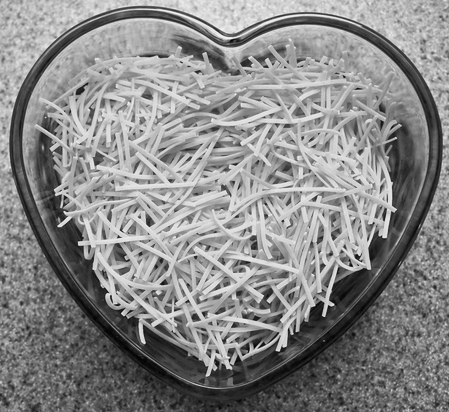
Judy Wieder Hurley Bloomgardener died on November 11, 2011, waiting until the sun had set and the Jewish Sabbath had begun. 11/11 was a day she chose years ago to celebrate as Noodle Day, whimsically designating long, thin noodles as the appropriate ritual food to represent the movement from straight and stiff to soft and supple, a life process she aspired to and beautifully exemplified.  A great lover of books, Noodle Day also represented for Judy the Day of Letters—straight and wavy lines constituting the basic elements of all written languages. She had planned an especially big celebration in 2011 when more 11s lined up. Recently, she had begun to ask family and friends to celebrate that day as her special day after she died. 11/11/11 turned out to be a different sort of day from the one she imagined. Or maybe not.

Photo by Teresa Kenney
That morning, her grandson cooked a large pot of noodles which all of Judy’s family and friends ate together at exactly 11:11 am., while gathered around her hospital bed. One daughter gently placed a few strands of the buttered, salted noodles on her chest as she lay in the coma she had slipped into three days earlier. Judy loved food—for its beauty, tastiness and the deep lessons it conveyed. She was a strong, intuitive woman, filled with joy and wonder at the beauty, mystery and complexity of the natural world. There is not a single one of her family and friends who does not believe that she chose this day to die. Around sunset, her three children, a grandchild, her partner and many friends gathered around her bed to sing and read to her. As her son read from one of her favorite books of Jewish humor, she clearly smiled several times. Then, we noticed her breathing begin to slow. We drew closer, stunned into complete silence, frozen with wonder as we watched her draw her last breath. We were left in a state of deep grief, but a grief softened by gratitude. She had made it to her day! We had all been with her! She died peacefully and with a smile! What greater gift could she have finally bestowed on us?

  *     *     *     *     *     *     *     *     *     *     *     *     *     *     *     *     *     *     *    

The moth first appeared on the sixth day of sitting shiva in Judy’s home, just after the last guest had left and the lights were being turned off. The moth fluttered in and out among 50 spherical, paper-framed photos that hung from a fishnet draped from the ceiling. Creating this three-dimensional collage had absorbed Judy during the last three months of her life, a final life review that started by sorting through hundreds of  photos to select the ones she felt were the most iconic of her long and rich life. She had gotten far enough in the art project to have three spheres hung when she was suddenly taken to the hospital on November 1. Her family and friends promised her in the hospital that if she were to die, they would finish the collage for her. Indeed, 15 people gathered two days after her death to hang the remaining photographic spheres, one last ritual Judy seemed to have planned for us. Filled with grief as we were, we couldn’t help being caught up in the excitement of hanging treasured photos of her life from the fishnet, like decorating a Christmas tree with lights. The photos twirled dynamically in the ceiling fan’s breeze. It looked wonderful. How satisfying that her family and closest friends were joining together to complete her last project and fulfill her last wish.

 
And how mysterious, then, to have a moth fluttering in and out, back and forth, among the photos, as if she were exploring each one. We had never seen a moth in the apartment before. How long had it been here? It was hard not to imagine that it was Judy herself, returning to enjoy and explore the creation she had generated but not completed. Had she come to savor once more the richly diverse scenes from her 73 years of life? Did she want to revisit the Statue of Liberty and the mushroom cloud, powerful  symbols for Judy of  hope and despair? To look once more at the book cover of Wasteland, a book that had been seminal in Judy’s youth? To see once again the photos of family and friends? To review images of the work she wholeheartedly embraced–against nuclear weapons; for Brazil’s poor; environmental work for a sustainable future; and the work in her later life as family therapist and social worker, supporting immigrants from Mexico? Each carefully chosen photo represented a different aspect of the life she lived with the inquisitiveness and joy of a child. The moth flew in and out among the photos for at least five minutes, flew briefly to the flower bouquet that had been with Judy in the hospital, then disappeared.

The next day, on the seventh and last day of shiva, Judy’s Buddhist teacher visited in the evening. He had heard the story of the moth. Suddenly he said, “I think your friend is back.” The moth rested on the desktop right next to him, as motionless then as it had been active the night before, perhaps calmed by the presence of a seasoned meditator. It stayed on the desktop until he left. Then it flew to the edge of the sliding glass door leading to the patio, pressing itself against the metal frame as if poised to leave. There it stayed, motionless. At about 6:30, after most guests had left, three of us gathered as close around the slight figure as we could, singing songs (including one of Judy’s favorites, “The Great Storm is Over”) and reading stories (Winnie the Pooh and Dunt Esk) until 9:38, that moment a week before when Judy had drawn her last breath.

During the night, the moth left the doorway to fly to the window side of the white curtain covering the apartment’s glass doors. During the day, as the sun shone through the curtain, we saw her shadowy form clearly outlined through the cloth, a tender, mystical and comforting presence, as we began the extraordinarily painful task of dismantling Judy’s apartment. Several times we gingerly pulled back the curtain to study the moth more carefully. It was a subtle pink coral, almost exactly the color of the pink shawl Judy draped across her chest nearly every day and night during the last years when she was confined to bed. That shawl accompanied her to her cremation. As we studied the moth, we saw lines on the back of the wings that looked exactly like a Japanese painting of mountains. Judy had asked that half her ashes be taken to the high Sierras. She loved Japanese landscape art. The subtlety of color and design would have gratified her sense of the Japanese aesthetic of shibui. Was it not perfect, we asked ourselves, that the many heavy burdens of her life should be transformed into the weightlessness of a moth and soft lines depicting mountains? Were we seeing meaning where there was no meaning? The remarkable events surrounding her death made it harder and harder to take a skeptical view of things.


When the feeling of unreality and disorientation of clearing her apartment got to be too difficult, many of us turned to the moth to remind us of the wise woman whose living spirit had so recently filled the now-empty room. Letting go of this place where we had experienced so much joy and so many wonderful memories were lodged was painful. But the moth’s tiny presence made its spirit felt throughout the hard days. She stayed hidden within the curtain folds all of Saturday, Sunday and Monday, utterly motionless in the daytime, though changing positions slightly each night, wisely moving farther out of the way of the busy traffic of the many people who came to help.

On Sunday night, the family members were invited to dinner at the home of a friend, where one of Judy’s daughters regaled people for almost three hours with sad, funny and heroic stories of her beloved mother. Then in Judy’s honor, the group played one game of Boggle, which Judy loved to play. In the Boggle letters, players found the words “moth” and “mother.”
 
On Monday morning, the moth moved back to the metal edge of the sliding glass door, at the topmost point. Again, it seemed poised to leave, but was completely motionless. There it remained all day as we completed the dismantling of the apartment. Now only Judy’s collage was left. Judy’s two daughters, Judy’s partner, and two of Judy’s closest friends gathered after dusk for one last ritual. We covered her box of ashes with a diaphanous lavender cloth, lit a rainbow candle, placed hearts and rocks and flowers on an altar constructed from the shards of the moving process, and sat around it, not knowing how to bring this stage to an end. Suddenly, one of the daughters’ dogs began to moan with a sound that her daughter had never heard from him. One by one, we joined the dog, our hesitant moans gradually swelling into heartfelt sobs, a true keening which continued for a long time. Then one of us uttered a prayer from the depths of our pain, we stood up, gathered around the moth at the window, and sang to her for a long time, one song reassuring her that she would be well, that we all would be well. We felt better. We had tea and cookies. Then it was time to take down the Life Collage, the last object in the room which might hold our friend to this place, and the final step before we said good-bye to Judy’s home, each other, and this unforgettable time together. We took the collage to a car. This stage of all of our lives was over.

  *     *     *     *     *     *     *     *     *     *     *     *     *     *     *     *     *     *     *     

We said good-night to each other and to the moth. Then all but one of us left the apartment for good, that person staying to keep vigil with the moth. She said a long good-night to the winged creature, then turned off the light about 9:30. Sleepless, she arose at 10:30 to look for the moth. The moth was gone and never reappeared.

For a moment in time, a window opened into a far more mysterious universe than most of us encounter in our daily lives, a universe that Judy sensed keenly while alive. It is comforting to imagine her spirit flying free among the moth family, a large, diverse and astonishingly beautiful family of creatures that roam the world at night while most of us sleep and dream. We will celebrate her every day of our lives, and especially on November 11, her Noodle Day, now our Noodle Day.

______________________________________________
Copyright, Barbara Riverwoman, all rights reserved. 

Barbara Riverwoman  recently filmed and edited  a DVD on conflict resolution with young children, titled "You Both Want the Elephant."  She loves dancing, birding and opera. She lives in Santa Cruz, California.  

Watercolor by Amber Alexander. Visit her shop on Etsy. Amber says of her art: "Watercolors are my medium of choice. I love the way the flow of ideas from my head and heart flow directly onto the paper."  

March 28, 2012

To Honor and Remember

The Thinning Veil 
by Tom Leskiw 

As I went out walking this fall afternoon, I heard a wisper wispering
I heard this wisper and I wondered, I heard this laugh and then I knew
The time is getting near my friends, the time that I hold dear my friends
The veil is getting thin, my friends, and strange things will pass through.
                                  —Anonymous
 ___________________________

In the autumn, I find myself spending more time in the desert area of our yard at dusk. Here, cactus, yucca, aloe, and other succulents we’ve planted stand in juxtaposition to surrounding redwood, fir, and spruce trees. This south-facing slope caught my eye the first time my wife Sue and I looked at the property. With a bit of creative visualization, I foresaw that the removal of introduced, leaning-over-the-garage Monterey pines would enhance the area for sun-loving plants. Ten years later, the site is flourishing: homage to my childhood desert roots.

The perimeter of the desert area supports hardwood trees: scarlet maple, Scouler’s—a dry site—willow, and a bit further afield, a big-leaf maple. In October, the leaves’ red-and-yellow pyrotechnics portend a change. The Earth creaks, the balance shifts slightly upon the thermal fulcrum. Lengthening shadows and the sun’s rays, slicing through translucent, trembling leaves, seem to point to… an opening of some kind.


Seasons and Cycles
Rooted in pagan traditions more than 2000 years old, Halloween grew out of the Celtic celebration marking the onset of winter’s gloom. Samhain—the Gaelic word for November—was a festival that celebrated the harvest of crops and livestock during late October and early November. Pronounced sow-een, it is a ritual tied to the seasonal cycles of life and death. The Celts considered Samhain to be the time when the separate worlds of the living and dead converge with spirits walking the Earth. Recently, perhaps responding to my Irish roots on my mother’s side, I’ve been inspired to learn a bit more about this Old World ritual.


The New World custom of Día de los muertos—Day of the Dead—has its origins in ancient Aztec ceremonies. The similarity between Samhain and Dia de los muertos is striking: the belief that the souls of the departed return for one day to their place of burial, and that the setting out of food and water on an altar will sustain them on their journey back to the spirit realm. During the time of the Aztecs, Dia de los Muertos was celebrated around the end of July. Following the Spanish conquest of Mexico, Catholic priests moved the holiday to coincide with the Christian holidays of All Saints’ and All Souls’ Day (November 1 and 2).

Samhain and the Day of the Dead—similar customs developed in both the Old and New Worlds—speak to a human need: to honor those who have come before. Living as I do at a latitude closer to Ireland than Mexico City, I’ll go with autumn as my choice for when this veil between the living and dead is at its thinnest. The idea that scary spirits are among us is intriguing, but my personal belief is that the departed are allies still available for counsel, rather than ghosts sent here to frighten us.  

Los Bagels is a local eatery that owes its name to the proprietor’s Jewish and Hispanic roots. Ofrendas—small altars built to display photographs of departed kin and friends—are constructed at his establishment several weeks prior to Día de los Muertos. Although aware of this local custom for several years, it hadn’t occurred to me to participate until six years ago, when several friends of ours died. With photos of the departed in hand, Sue and I headed into the city of Eureka. We placed the photographs on the ofrenda, pleased to find room among the candles, skeleton figurines, and other photographs.

I whispered a prayer and studied the photographs of the friends I’d brought. A bond had been forged with each of these people: an annual 2 a.m. wake-up call to conduct my breeding bird survey route with co-worker Tony Hacking, a wildlife biologist with the U.S. Forest Service. The memory of seeing him—to the delight of child and adult alike—clad in a Bigfoot costume striding along the Klamath River during field trips for International Migratory Bird Day brought a smile to my lips. And here was Tim McKay, long-time director of the NEC—Northcoast Environmental Center—who’d collaborated with Sue on several projects to protect our local environment. Tim’s passing cut deep: we’d come to imagine that, after nearly three decades helming the NEC, that he’d forever be there, fighting the good fight. Tim and Tony left us in 2006 and 2007.

Photo by Tony Northrup
And biologist Paul Springer. Teacher, mentor and a member of the endangered Aleutian Goose recovery team, Paul helped to shepherd a species back from extinction. His deeds spoke volumes, showing us how to care—for family, community, and the planet.

Placing the photographs of the departed on the ofrenda underscored for me how, over time, trusted colleagues and friends—through shared activities and community commitments—become kin.
                                                                                                 
*         *           *          *          *          *            *             *           *           *           *          *            *            *       

During late October-early November, the desert area in our yard is anything but barren or deserted. One aloe was a gift from Big Gary, struck down by cancer in 2002. Slightly up-slope stands a coast live oak. Small, slow-growing, it began as an acorn from Tim McKay’s tree. To the east of the oak is an agave, a pup from Tony and Theresa Hacking’s parent plant that we purchased at the Orleans Migratory Bird celebration of May 2001.

Several years ago, on the Day of the Dead, we received the first heavy rain of the fall. The onset of autumnal rains—one seasonal door shutting while another opens—can be an abrupt shift. The smell of re-moistened humus, dampened earth, and ripening fruit—apple, huckleberry, cascara, and coffee berry—unleash a cascade of olfactory memories, visceral and vital.  

Ysabel de la Rosa
Tannins and terpenes, aromatic compounds contained in leaf litter, are awakened from their dry-season somnolence. The natural world’s sluggish, heat-hazed ambiance has disappeared—soon to be replaced by wind-whipped ocean waves, pelting rain, and mountain snowstorms. By late October, increasing rain and diminishing sunlight combine to bring an end to the growing season. Foods still on the vine: winter squash, tomatoes, melons—must be harvested and brought inside. This is an exciting time, when crops that harnessed the sun’s energy lie cheek-to-jowl with elements of decay: foliage reduced to a flaccid mush from frost and the smell of decomposing leaf litter—punctuated here-and-there with emerging mushrooms. It is no wonder that the ancients believed that the separate worlds of the living and dead converged during this time frame.

Wikimedia
Back in my yard, the rain had slackened to a mist. Congealed droplets fell from trees, shrubs, and garage eaves—their cadence sounding like irregular footsteps. The veil had thinned; the door was ajar, and souls of the departed streamed through the opening. Slowly, a bit self-conscious at first, I hailed them. “Gary, what’s goin’ on? We miss your visits, your story-telling. …. Hey, Tim: the big news is, we may have reached a tipping point on removing the Klamath River dams. The salmon may make it home yet. The good fight goes on.

“Tony, I decided to give up my breeding bird survey route. I retired this summer and my hearing isn’t what it once was. You’ll be pleased to know that the Orleans International Migratory Bird Day has a new name: the Tony Hacking Bigfoot Bird Celebration. When we reflect on the energy you devoted to the event—up early for birds, mid-day crafts with the kids, then the night shift in search of bats and owls… well, it prompted us to ‘raise our game.’ We all get together now the night before the event for a potluck prior to the slideshow. The example you set has made us all want to give a little more of ourselves; we’ve grown closer as a community.”

Standing there, talking with the spirits of the departed, crystallized something for me. Life is a balancing act: honor the past, yet live for today, while moving toward the future. Until that evening, I’d yet to grasp the extent to which our desert area has become a memorial to those Sue and I have known. Regardless of the season, spirits reside here. They exist anywhere memories are kept alive, where a person’s deeds resonate far beyond their lifetime.

The agave from Tony’s yard has now pupped. In anticipation of these and similar pups, I’ve dug an additional three holes in our desert area. Out went the impoverished ridgetop clay, in went a potpourri of better-draining material that I’d prepared.

Wikimedia Commons
The next morning, I wrested the agave pup from Tony’s parent plant. Holding my hands together carefully to support the root ball, I placed it into the earth. As I troweled soil mix onto the plant’s roots, I spoke to Paul Springer. “What a privilege for me to put together testimonials from your former students, friends, colleagues, and family. You left your mark on so many! Thanks again for showing me a bird I’d never seen before in Humboldt County: Lawrence’s Goldfinch. And to learn that this enigmatic, nomadic species actually nests in our area … you were vital, making discoveries until the end. Vaya con Dios, my friend.”

Ysabel de la Rosa
Clouds began to part, and the sun’s rays slanted down. The mysteries of night—swirling mist and water droplets falling from tree and eave that mimicked the cadence of human footfalls—had retreated. I looked at my soil-stained hands and smiled at the memories of good friends lost along the way. Sue called to me that lunch was served. I gathered my tools and, once again firmly in the present, made my way back to the house.

____________________________________________________  


People on a tour of Tom and Sue's garden in California.
Tom Leskiw lives outside Eureka, California, with his wife Sue and their dog, Gypsy. He retired in 2009, following a 31-year career as a hydrologic / biologic technician for Six Rivers National Forest. His essays have appeared in a variety of journals, including Birding, CrossRoads: A Southern Culture Annual, LBJ: Avian Life, Avian Arts, Nature in Legend and Story, Pilgrimage, This Watery World: Humans and the Sea, Watershed, The Motherhood Muse (1st place contest winner), Living Lessons, forthcoming in Snowy Egret, and in various online publications. His monthly column appears at www.RRAS.org. and his Website resides at www.tomleskiw.com

March 21, 2012

Comfort Comes Gentle

One of the hardest things to do during times of grief is to allow ourselves to be still, to enter silence, and simply be aware of what Is. It can also be one of the most rewarding. This poem by MG McClintock reminds us of the gift we can find in those still, silent moments.
______________________________________________________


Solace
by MG McClintock
 
Two gentle white butterflies ride a warm summer breeze
That lifts my hair and flutters through the leaves
You reside in that warm feeling; soft, on the nape of my neck
The familiar scent that swirls; fresh yet faint
You offer a sense of reassurance, a feeling so subtle and settling
An invisible touch on my right arm
Barely a whisper, but still a whisper
When the entire world falls away and silence beckons, you answer.


©MG McClintock, all rights reserved.

MG Mack resides in a small community in upstate New York. She is a freelance writer, painter, avid gardener and mother of four.

March 18, 2012

Has your eye seen a sparrow?


I've often thought our ancestors believed that angels have wings, not because they saw an actual angel (although I certainly don't discount that possibility), but because they saw birds. Before airplanes, what was there that could soar heavenward but these winged wonders? In the last decade of my life, birds have appeared at most interesting times, and some of their most interesting, inexplicable appearances have occurred after someone I love has died.

At our mother's graveside service, the field behind the cemetery was full of crows. When I say full, I mean packed--little patches of grass barely visible through the jet black. Not a sound came from one of them. They stayed silent and still as long as we were at the grave site. The next day, my family and I returned to the cemetery to find a group of crows flying above our mother's grave in  a vertical circle, as though they were on a Ferris wheel. They cawed incessantly. I said to my father: "It looks like they're having a celebration."  He smiled.

Within about two weeks, a crow couple established a nest near my parents' house. I never saw exactly where. They became a daily presence, however. My father walked two miles every morning, and every day for the next 12 months, the crows accompanied him on his walk. They would fly ahead of him, light in a tree and wait for him to catch up with them, then fly to the next tree station until he caught up with them again. My parents had lived in the same neighborhood for more than 30 years and never seen a crow there before.

Three important people were missing from my son's wedding: my mother and my maternal grandparents, all having left this earthly life. In a transom-like window at the highest point of the sanctuary, three pigeons sat on a narrow ledge--quiet and looking in toward the sanctuary. I wasn't the only one to remark on their presence, how peaceful they seemed and how intent on "watching."

On my sister's last night on this earth, a lone mockingbird perched on a street lamp outside her hospital room, singing all night until late into the dawn. Its music was exceptional--even for this well-known song bird--clear, crystalline notes trilling, turning, soaring into the night air. Only now as I write this, I remember giving my sister a photo of a mockingbird, its face to the sun, paired with one of my favorite lines from Tagore's Fireflies:  "Faith is the bird that feels the light and sings while the dawn is still dark." 

I've had more experiences with birds as what I believe are signs of presence, celebration, accompaniment and reassurance. I've talked to others who have also had such experiences. Our experiences usually have common elements: birds doing things they don't normally do, birds "hanging out," unafraid, staying with you; surprise--seeing birds where you don't expect them or where they rarely go. And then, of course, the comfort that comes simply from their music, flight, and natural beauty.

On Valentine's Day 2012, I had dinner with my sister's husband. It would have been their 20th wedding anniversary the next week. We ate at the same restaurant where we lunched with my sister the day after she received the diagnosis of the illness that ended her life. As we talked, a tiny plump bird lighted on the wobbly, wind-tossed stalk outside the window next to our table and stayed awhile--cocking and turning its head as though it were listening to our conversation. In those moments, it felt to me that there were once again three of us, that the bird was a messenger, not filling in for my sister, but telling us that the universe knew we were still missing a third of our trio, and in response, was sending us a breathing, heart-pulsing creature, lively, inquisitive, and looking happy. 

There's an old Gospel hymn called "His Eye is on the Sparrow."  Jessica Fenlon's poem below reminded me of that line and of the importance of where we direct our own vision. I believe there are times when God grants us our own "sparrow"-- a winged creature from the sky pointed in our direction, serving as a witness for and sign of Presence, giving us something, other than our grief, at which to wonder.

March 11, 2012

Love, Light, Flight

It's hard to believe, but today marks the one-year anniversary of the Fukushima tsunami. Our readers and writers turned to Haiku then to express and speak to this loss, so I think it is especially fitting that I post this remarkable Haiku poem by Jessica Fenlon today.


haiku for my friend who hurts

        gravestones poke out
of the snow            broken teeth

a sparrow takes flight

 
            Jessica Fenlon


_____________________________________
 
This poem is from Jessica's unpublished manuscript A Limited Atlas of Spiritual Anatomy. Jessica is an artist, poet, and experimental filmmaker. Her book spiritual side effects is available here.Visit her site at DrawClose
Poem, copyright Jessica Fenlon, all rights reserved.